

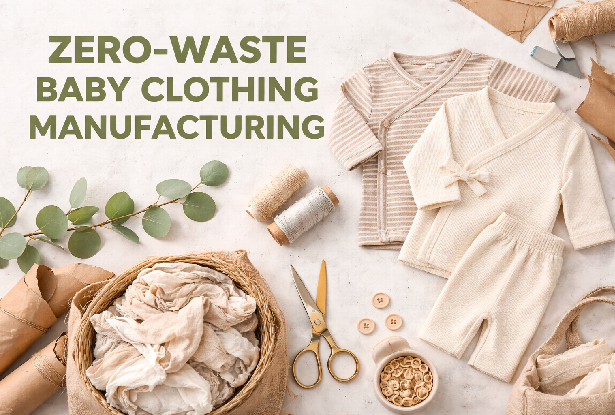
The baby clothing industry is built on care, responsibility, and trust. Parents expect garments that are safe for their children, gentle on sensitive skin, and made with integrity. But beyond comfort and quality, there is another responsibility that manufacturers can no longer ignore: reducing waste.
At Organic & More, zero-waste manufacturing is not a trend we adopted overnight. It is an ongoing journey shaped by practical decisions, continuous learning, and a commitment to doing better at every stage of production. This article takes you inside our factory to explain what zero-waste manufacturing really means in baby clothing, why it matters, and how we work toward it every day.
Why Zero-Waste Matters in Baby Clothing Manufacturing
The fashion and textile industry is one of the largest contributors to global waste. Fabric offcuts, rejected garments, excess inventory, packaging waste, and inefficient processes all add up. In baby clothing manufacturing, where production volumes can be high and fabrics are often delicate, waste can accumulate quickly if not managed carefully.
Zero-waste manufacturing aims to minimize waste at the source rather than managing it after it is created. For us, this approach makes sense for several reasons:
-
Baby clothing is closely linked to health and safety
-
Parents increasingly care about sustainability and transparency
-
Brands want responsible manufacturing partners
-
Reducing waste improves efficiency and long-term viability
Zero-waste is not about perfection. It is about consistent improvement and thoughtful production.
Understanding Zero-Waste Manufacturing Beyond the Buzzword
Zero-waste manufacturing is often misunderstood. It does not mean that a factory produces absolutely no waste. Instead, it means designing systems where waste is minimized, reused, recycled, or repurposed wherever possible.
In practical terms, zero-waste manufacturing involves:
-
Efficient use of raw materials
-
Smart pattern design and cutting
-
Responsible fabric sourcing
-
Waste segregation and reuse
-
Long-term thinking rather than short-term cost cutting
At Organic & More, zero-waste is integrated into how we plan, produce, and evaluate our work.
Where Our Journey Began
Our journey toward zero-waste manufacturing began with a simple question: Where does our waste come from?
Before making changes, we carefully observed our production process. We identified key areas where waste was generated, including:
-
Fabric cutting leftovers
-
Overproduction due to inaccurate forecasting
-
Rejected garments from quality issues
-
Excess packaging materials
Understanding these problem areas allowed us to focus on solutions that made sense for our scale and capabilities.
Smarter Fabric Sourcing as the First Step
Waste reduction begins before fabric even enters the factory. Choosing the right materials and suppliers plays a major role in minimizing waste later in the process.
At Organic & More, we prioritize:
-
Organic and responsibly produced fabrics
-
Consistent fabric quality to reduce rejection rates
-
Suppliers who align with ethical and environmental standards
-
Fabric widths and specifications that suit our patterns
When fabric quality is reliable, there is less waste caused by defects, uneven dyeing, or inconsistent shrinkage.
Pattern Development and Zero-Waste Thinking
One of the biggest sources of textile waste is poor pattern planning. Even small inefficiencies in pattern layout can result in large amounts of leftover fabric over time.
Our approach includes:
-
Optimizing pattern layouts to reduce offcuts
-
Designing baby garments with efficient shapes
-
Adjusting sizing and grading to improve fabric utilization
-
Reviewing patterns regularly for improvement opportunities
Baby clothing, by nature, allows for thoughtful design choices that support better fabric use. We take advantage of this wherever possible without compromising comfort or fit.
Responsible Fabric Cutting Practices
Cutting is a critical stage in baby clothing manufacturing. This is where most fabric waste is created, but it is also where the most improvement is possible.
Our cutting practices focus on:
-
Precise measurement and alignment
-
Trained cutting teams who understand fabric behavior
-
Minimizing trial cuts and errors
-
Separating reusable scraps immediately
Instead of treating offcuts as unavoidable waste, we treat them as a resource that still has value.
Reusing and Repurposing Fabric Waste
Not all fabric waste is the same. Some pieces are too small to use, but many offcuts can be repurposed with the right planning.
At Organic & More, reusable fabric scraps may be used for:
-
Small baby accessories
-
Internal components or reinforcements
-
Sampling and testing
-
Future product development
Fabric waste that cannot be reused in-house is sorted and sent for recycling or responsible disposal, depending on the material.
Quality Control as a Waste-Reduction Tool
Quality issues are a major cause of waste in garment manufacturing. Rejected garments mean wasted fabric, labor, energy, and time.
To reduce this, we focus on:
-
Early quality checks during production
-
Training workers to identify issues before completion
-
Clear production guidelines and specifications
-
Continuous improvement based on defect analysis
High quality is not just about customer satisfaction. It is also one of the most effective ways to reduce waste.
Producing the Right Quantity at the Right Time
Overproduction is one of the most overlooked sources of waste in the clothing industry. Excess inventory often ends up discounted, destroyed, or unused.
As a manufacturer, we work closely with our buyers to:
-
Plan realistic production quantities
-
Avoid unnecessary buffer stock
-
Support made-to-order production models where possible
-
Adjust production schedules based on demand
This approach benefits both the brand and the environment.
Zero-Waste Mindset on the Factory Floor
Zero-waste manufacturing is not just about systems. It is about people.
At Organic & More, we encourage a culture where every team member understands why waste reduction matters. This includes:
-
Training workers on material efficiency
-
Encouraging suggestions from the production floor
-
Creating accountability at every stage
-
Treating waste reduction as a shared responsibility
Small changes made by skilled workers often have the biggest impact.
Packaging With Purpose
Waste does not stop at garment production. Packaging is another important area where zero-waste thinking applies.
Our packaging approach focuses on:
-
Minimizing unnecessary layers
-
Using recyclable or reusable materials
-
Avoiding plastic where possible
-
Packing efficiently to reduce shipping volume
For baby clothing, packaging should protect the product without creating excess waste.
Balancing Sustainability With Practical Manufacturing
Zero-waste manufacturing is not about sacrificing quality, efficiency, or affordability. In fact, many waste-reduction practices improve overall operations.
Benefits we have experienced include:
-
Better material utilization
-
Lower long-term costs
-
Improved production efficiency
-
Stronger relationships with conscious brands
Sustainability and practicality are not opposites. When approached thoughtfully, they support each other.
Challenges We Continue to Face
Our journey toward zero-waste manufacturing is ongoing. There are still challenges we work through every day, such as:
-
Limited recycling options for certain fabric blends
-
Balancing cost pressures with sustainable choices
-
Adapting zero-waste principles at scale
-
Aligning sustainability goals with buyer expectations
Being transparent about these challenges is part of our commitment to honest manufacturing.
Why Zero-Waste Manufacturing Matters to Our Buyers
Brands and retailers today are under increasing pressure to demonstrate responsible sourcing. Working with a zero-waste-focused manufacturer helps them:
-
Meet sustainability commitments
-
Build trust with consumers
-
Reduce supply-chain risk
-
Align with global environmental standards
At Organic & More, we see ourselves as partners, not just suppliers.
Why It Matters to Parents and the Next Generation
Ultimately, baby clothing is about the future. Reducing waste today helps protect the environment that children will grow up in tomorrow.
Zero-waste manufacturing supports:
-
Cleaner production processes
-
Reduced environmental impact
-
Safer materials for babies
-
A more responsible fashion industry
For parents who care deeply about what touches their child’s skin, how it is made matters.
Looking Ahead: Our Commitment to Continuous Improvement
Zero-waste manufacturing is not a destination. It is a continuous process of learning, refining, and improving.
At Organic & More, our future focus includes:
-
Further improving fabric efficiency
-
Exploring new recycling partnerships
-
Expanding sustainable material options
-
Strengthening transparency with our buyers
Every step forward counts, no matter how small.
Final Thoughts
Zero-waste baby clothing manufacturing requires intention, discipline, and collaboration. It is not achieved through marketing claims, but through daily decisions on the factory floor.
At Organic & More, our journey toward zero-waste manufacturing reflects who we are as a company. We believe that baby clothing should be made with care for the child, respect for the people who make it, and responsibility toward the planet.
This journey continues, and we are committed to moving forward with honesty, purpose, and steady progress.
Recent Comments